
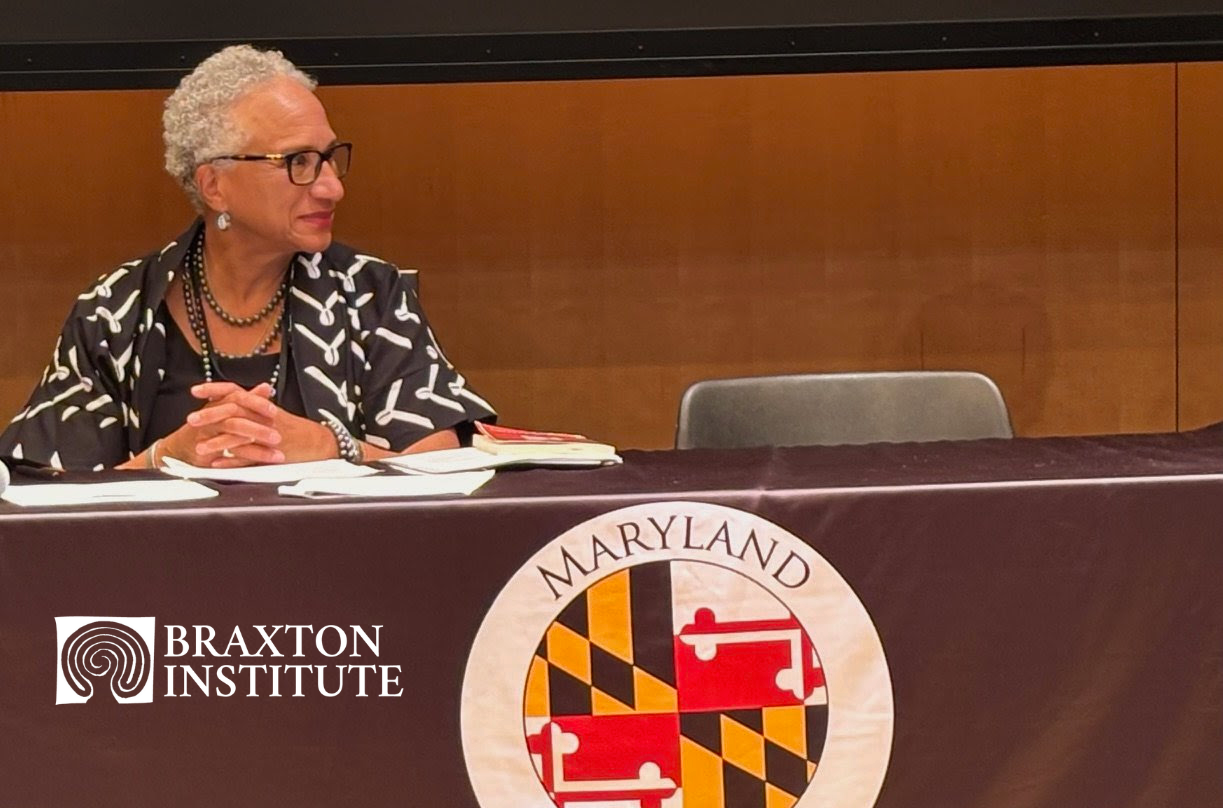
Maryland Lynching Truth and Reconciliation Commission Makes History

Joanne M. Braxton, Ph.D, Founder and CEO, Braxton Institute Photo Credit: Nicole Oxendine

The Braxton Institute celebrates the Maryland Lynching Truth and Reconciliation Commission (MLTRC), the first state-sponsored effort in the United States to investigate, document, and reckon with the history of racial terror lynchings. The Commission’s Final Report was submitted to the Governor and the General Assembly in December 2025. On Wednesday, January 14, the commission held a virtual briefing hosted by members of the Commission - providing the public with an overview of the key findings and recommendations, a Q&A, and recommendations on how we the people can support this extensive project requiring more than six years of scholarship, community engagement, and research of Maryland's history of racial terror lynching between 1854 and 1933. The report documents the stories of 38 victims and makes “84  comprehensive recommendations for repair and reconciliation.”
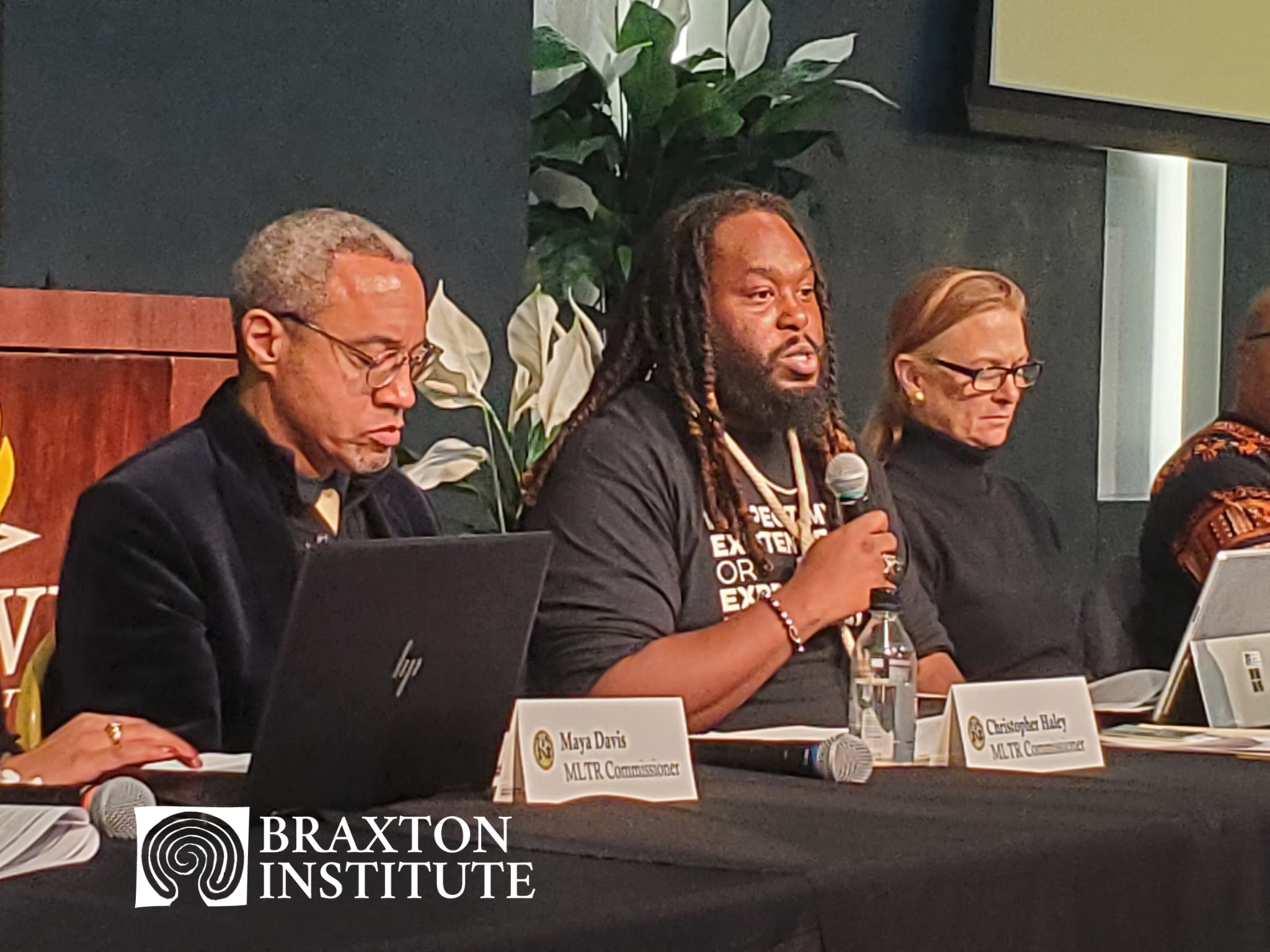
Dr. Chris Haley and Dr. David Fakunkle, MLTRC at Bowie State University, February 2025

We give special thanks to Dr. David Fakunle, Chair, a longtime friend of the Lakeland community and the Braxton Institute. Other members of the Commission include Dr. Charles L. Chavis, Vice Chair, David Armenti, Linsey Baker, Iris Leigh Barnes, Simone Barrett, Michelle Coles, Dr. Nicholas Creary, Dr. Holly Fisher-Hickman, Maya Davis, Chris Haley, Elizabeth Hughes, Amy Mifflin, Carl Snowden, Dr. Marshall Stevenson, Stephanie Suereth, Teisha Dupre, and Robert T. Parker. We celebrate these leaders and give thanks for their labor and their history-making reparative witness!  Our deep gratitude also extends to those professionals in the Attorney General's office and colleagues at Bowie State University who shepherded the project. These beloveds include Kristin McFarlane, Sophie Asike, Will Schwarz, Ann Asare, Brianna Griffin, and Trish Floyd, who recently joined the Braxton Institute team as a Senior Adviser. We give thanks!

Sources: Commissioners - Maryland Lynching Truth and Reconciliation Commission  and Maryland Lynching Memorial Project.
Historic Override Paves the Way for Maryland Reparations Commission to Lead and to Serve

By Joanne M. Braxton, PhD. Founder and CEO, Braxton Institute

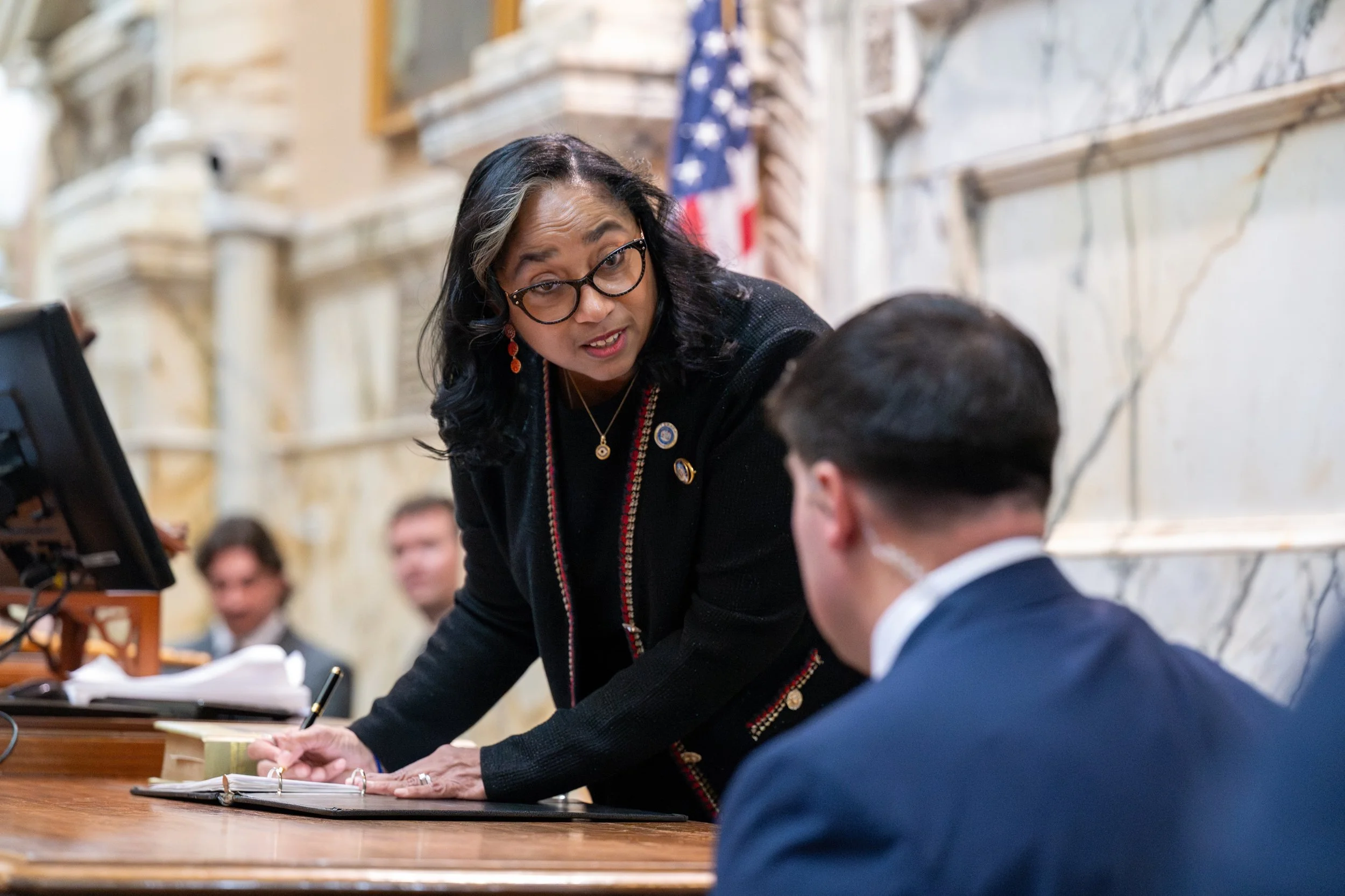
Swearing in of the Speaker of the House (54990132518).jpg

Governor Moore, Lt. Governor Aruna Miller and First Lady Dawn Blythe Moore attend the Swearing in Ceremony for the Speaker of the House by Joe Andrucyk, Patrick Siebert, Polly Irungu at The House Chamber, 100 State Circle, Annapolis MD 21401

In December 2025, Maryland lawmakers overrode Gov. Wes Moore’s veto, leading to the establishment of the Maryland Reparations Commission. After generations of chattel slavery and Jim Crow, the state of Maryland is finally acknowledging what descendants and communities have said for generations: reparations are necessary.

In the wake of Governor Moore’s veto of statewide reparations commission legislation, the Braxton Institute offered “ A Reparative Vision for Maryland” and proposals for meaningful action now. Rooted in deep community knowledge, we proposed a statewide vision for racial equity and meaningful, community-led repair. The most impactful of these is arguably the Maryland Reparations Commission. Speaking on the need for an override, Senator Charles Sydnor had a message for his colleagues: “Let’s be clear: Slavery may have ended 150 years ago, but segregation, redlining, and discrimination stretched well into our own lifetime. The lingering effects are real, and we cannot prepare [for] what we refuse to acknowledge.”

This moment may seem quick to some. However, the establishment of a reparations commission in Maryland is the result of intergenerational advocacy from Black communities across the state. Additionally, the Maryland Reparations Commission exists because grassroots organizations, groups, and activists across the state refused to accept denial as the definitive answer. The Commission builds on the state's past efforts to acknowledge the harms done to Black communities, including formal support for H.R. 40, an apology, and recognition of the need for reparations.

Maryland’s economy and institutions, like much of the United States, have been shaped by enslavement and racial exploitation. That legacy did not end with emancipation. It continued and evolved, showing up in housing discrimination, unequal education, labor exclusion, policing, medical neglect, and the destruction or displacement of Black communities. For example, communities like Lakeland in College Park, Maryland, have been protesting and documenting harm for more than 50 years since misguided urban planning mandated the destruction of more than two-thirds of their communities. Riversdale House Museum, located in Prince George’s County, MD, was a site of enslavement and horrific harm to enslaved African Americans, touching my own family and its community. The same is true of Montpelier Mansion in Laurel, Maryland, the seat of an industrial plantation where my great-grandfather and his mother and his brothers were enslaved.

The Maryland Reparations Commission is an opportunity to address these harms and to impact future actions that can create justice for Black lives in Maryland. It requires the state to face its policy history, not as an accident, but as an interconnected set of systems built to extract and exclude, creating a debt yet to be repaid.

One of the most significant historical examples is Crownsville State Hospital, formerly known as the Hospital for the Negro Insane of Maryland. Crownsville is a painful reminder that state violence has not only been economic or physical; it has also been medical and institutional. Black psychiatric patients were housed in a segregated medical system that reduced them to near enslavement, denied them dignity, and destroyed families. Descendants deserve recompense.

 The establishment of the Maryland Reparations Commission is to be celebrated.  It is the result of steady, strategic organizing by community leaders, activists, organizers, local coalitions, historians, and community groups. Homes within various neighborhoods were bulldozed and burned - destroying the fabric of our once vital Black community established at the beginning of the 20th century.  “Lakelanders, surrounded by racially hostile communities, lost their homes, their businesses, their racially safe community, and their way of life built over generations.”

Indeed, as documented in the harm report, the multifaceted harm to Lakelanders was enabled by several entities, including the state of Maryland, whose laws enabled the seizure of land. The City of College Park, the University of Maryland, the Washington Metropolitan Area Transit Authority (WMATA), Prince George’s County Public Schools, and the Maryland-National Capital Park and Planning Commission all played a role. Each entity is responsible for the harm and has an obligation not to look away. The Maryland Reparations Commission must support the well-documented work of smaller commissions addressing harms caused by multiple entities, as only a statewide commission can. Oversight will be required.

 In Maryland, historic legacies of harm are not just memories. They are documented and visible in the landscape. They can be seen in historic buildings and former institutions that show how a racial order created wealth for some and harm for others. The work to repair these harms will advance, due to the persistence of the Legislative Black Caucus, as well as people who have worked for years in rooms without cameras and in meetings that never made the news, whose names we may never know.

 The Braxton Institute for Sustainability, Resiliency and Joy, and Reparations for Lakeland Now have been working in coalition with the City of College Park Restorative Justice Commission, the Greenbelt Reparations Commission, the Maryland Lynching Truth and Reconciliation Commission, and other organizations to help make reparative justice in Maryland a reality on the local level and now statewide. Now, the work is to make sure the Maryland Reparations Commission stays focused on the needs of our communities, acts with urgency, and remains accountable.

In the coming months, the Braxton Institute will organize in-person and virtual convenings and Dialogues on Resisting and Thriving to support Reparations for Lakeland Now, the College Park Restorative Justice Commission, the Greenbelt Restorative Justice Commission, and other communities of repair in coordinating insights, sharing models, supporting each other, and making sure that our viewpoints are represented. The first of these convenings, the Black-Eyed Susans for Reparations Convening, will take place in February 2025, with small-group work sessions among our existing collaborators. To stay abreast of these and other community activities, please read our blogs and newsletters and follow us on social media.

Reflection on “A Day of Acknowledgement: Confronting the Legacy of Slavery”

On Saturday, November 22, 2025, I had the honor of representing the Braxton Institute at A Day of Acknowledgement: Confronting the Legacy of Slavery, held at Maryland Hall in Annapolis. The program centered on a historic moment: County Executive Steuart Pittman’s formal apology for the profound and enduring impacts of slavery on generations of Black Americans.

Reparations for Lakeland Now! Witnessing a Historic Reparations Moment in College Park, Maryland

On Tuesday October 7, 2025 the Braxton Institute pulled together a remarkable group of local, regional, and national reparations leaders to witness a historic presentation by the College Park Restorative Justice Commission to the College Park, Maryland City Council. “The Way Forward Towards Restorative Justice in College Park” is a comprehensive range of initiatives that, when carried out, will make good the City’s promise for repair.

Braxton Institute August-September 2025 Newsletter

With gratitude and commitment, we are living into a season of momentum in Lakeland, Maryland, anticipating a transition from harm to hope and greater well-being for the entire City of College Park, Maryland. What was once held in vision has become consensus, and what was once consensus is now moving toward implementation. This new phase of reparations work is grounded in clear priorities articulated by the Lakeland community itself, and these restorative priorities are moving the city from acknowledgment into action.

Lakeland's Five Pillars of Beloved Community: A Model for Repair

From the archives of the Lakeland Community Heritage Project and the testimony of Lakelanders, members of a historic African American town in Maryland adjacent to Washington, DC, five recurring themes emerge. These themes describe the strength and vitality of Lakeland before “urban renewal.” Social psychiatrist Mindy Fullilove, M.D., observed that these “Five Pillars” represent all of the necessary components for a healthy urban habitat.

Braxton Institute June-July 2025 Newsletter

It has been a rigorous season here at the Braxton Institute—advancing the Reparations for Lakeland Now! campaign, contributing to a landmark report of historical harm, and holding healing-centered space through our Golden Repair Circle of Care for Reparations Leaders. Our efforts are rooted in a vision as bold as it is tender: to repair what has been broken, and to restore what sustains us.

From Lakeland to the UN: Building Bridges

I was deeply honored to attend the fourth session of the United Nations Permanent Forum on People of African Descent (PFPAD) in New York City, from April 14-17, 2025. For weeks leading up to this convening, there had been online side events. Many of these events focused on the intersection of health and healing and addressing the violence against Black women and girls around the world… These preparatory programs updated participants like me with the latest knowledge about conditions impacting people of African descent globally… This was my first Permanent Forum on People of African Descent, and I was approaching it with my “beginner’s mind,” the student with everything to learn.

Why Do We Call This Friday Good?

For those who observe the Christian traditions of Holy Week, Good Friday invites remembrance of Jesus’ crucifixion. Some Christians mark the day with rituals contemplating the Stations of the Cross or Jesus’ seven last words; grateful devotions to honor his suffering and death as a saving sacrifice that forgives human sin. But not all Christians approach Good Friday this way. For others, such as myself and many like me, Good Friday is a day to grieve the historical reality that the Roman Empire publicly executed Jesus to terrorize his disciples and to quell uprisings of Jewish resistance.

On Choosing Joy: Lessons from My Toddler

Like the majority of black women in America, I waited on the most recent presidential election results with bated breath, hoping against hope that this country was progressive enough to choose a woman of color to lead it. Exhausted by nearly a decade of divisive,  hate-filled political rhetoric, I desperately wanted to turn the page on this disheartening chapter and finally feel like we were moving forward. 

Braxton Institute Reparations Leaders Featured in NBC4 Special

The Braxton Institute continues to lead the conversation on reparative justice and community restoration, as highlighted in a recent NBC4 special. The segment featured Dr. Joanne Braxton, founder and President of the Braxton Institute, alongside Maxine Gross, College Park Reparative Justice Commission Chair and Braxton Institute’s Reparations for Lakeland Now! initiative. 

Testimony on SB469

Today was a long but good day. I had the honor of giving testimony before the Maryland Senate Committee on Education, Energy, and Environment on MD SB469 – the Harriet Tubman Community Investment Act (Maryland Reparations Study for Black Descendants of Enslaved Individuals). We were required to submit our testimony in advance, and I thought I was being slick by submitting mine as “written testimony” instead of “oral and written testimony'“; My plan was to have my testimony on the record and then sit back and watch the activities unfold.